30 June 2026
newsletter
When Two Squares Make a Rectangle: GC Sets Limits on Design Protection for Modular Products
In its judgment of 14 January 2026 (Case T-628/24, LEGO), the General Court ("GC") delivered a notable ruling on the individual character of Registered EU Designs ("REUDs") in the context of modular toy building systems. The decision raises important questions for businesses relying on design protection for modular systems.
The Case
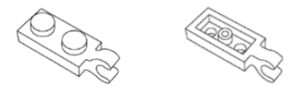
A Chinese company applied to the EUIPO for a declaration of invalidity of an REUD held by Lego A/S, registered for "building blocks of a toy building set". The challenge was based on a lack of individual character under Art 6 EU Design Regulation (EUDR), whereby the contested rectangular building block allegedly produced the same overall impression as an older, square-shaped LEGO block:
Contested REUD (2/7 views depicted):
Prior design:
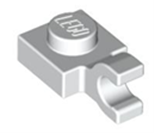
The EUIPO Invalidity Division declared the REUD invalid, and the Board of Appeal upheld this finding, concluding that the designs produced a "similar overall impression" on the informed user. The GC dismissed Lego's appeal in its entirety.
The Court's Reasoning
The GC upheld the invalidity on three key grounds:
- Geometric scaling as "continuation of the same pattern": The GC found that when two squares are combined, they naturally form a rectangle, meaning the informed user would perceive the contested rectangular design as a continuation of the same pattern established in the prior square design. Consequently, neither the change from a square to a rectangular shape nor the addition of a second stud was sufficient to produce a different overall impression.
- Hidden features carry little weight: Although the contested design featured an additional cylindrical element on its underside, the GC held that, since building blocks are mainly manipulated from above, this element was a minor detail that the informed user would not particularly notice. This difference was not sufficient to create a different overall impression.
- Broad design freedom works against the designer: The Court noted that, paradoxically, the designer's wide freedom in choosing the shape and contours of building blocks reinforced the conclusion that designs without significant differences produce the same overall impression.
Practical Implications for Businesses
This ruling holds valuable lessons for businesses relying on design protection, particularly for modular or scalable product systems:
- Mere scaling is risky: Businesses that merely scale an existing design or proportionally duplicate a feature risk having the new design declared invalid if the basic pattern is already known from the prior art. To secure individual character, combine multiple independent design elements that cannot be derived from simple geometric scaling.
- Consider usage patterns: Features that remain hidden during normal use – such as the underside of a building block – may carry little to no weight in the overall impression assessment. When developing registrable designs, focus on features that are visible during the product's intended use.
- Watch the legal test being applied: The Board of Appeal – uncorrected by the Court – applied a test of "similar overall impression" rather than the statutory test under Art 6 EUDR, which asks whether the overall impression of a design differs from the overall impression produced by a prior design. This shift could raise the bar for proving individual character and lower the threshold for invalidity. Businesses should be aware of this evolving standard when assessing the robustness of their design portfolios.
Conclusion
This decision demonstrates that in the area of modular systems, geometric scaling and the functional invisibility of features can significantly limit a design's individual character. Individual character is best secured through the combination of multiple independent design elements that cannot be derived from a simple geometric scaling of a prior design.
Moreover, the GC's uncritical adoption of the "similar overall impression" formula – deviating from the statutory standard – risks raising the requirements for proving individual character and approximating design law to trademark confusion analysis, a development that calls for clarification by the European Court of Justice.
Birgit
Kapeller-Hirsch
Counsel
austria vienna