
foreign direct investment info corner
This info corner provides an up-to-date overview of the currently existing FDI regimes in the CEE, covering the following aspects: Filing requirements, process and timetable, legal basis and related Schoenherr publications. Following the trend to tighten and set up FDI screening mechanisms, it will also keep pace with ongoing developments in jurisdictions where new rules are in the pipeline and therefore be continuously updated.
We have prepared a booklet that provides an up-to-date overview of the currently existing FDI regimes in CEE.
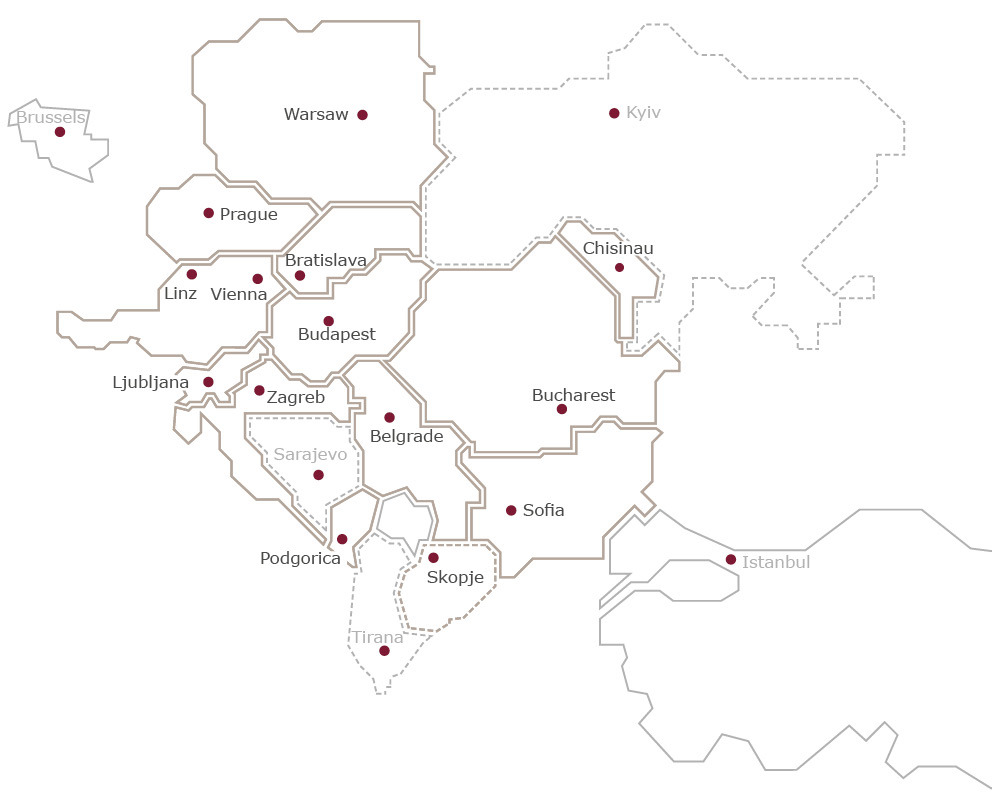
Click on each country to expand further information.
In addition, we are developing the FDI Navigator, an AI-powered tool answering plain language questions on FDI regimes in CEE. If you want to test it, reach out to the FDI team!
FDI booklet
click on the map to jump to the country
Schoenherr publications on FDI
country
all
legal areas and industries
all
newsletter
23 February 2026
J.Kupčík E.Hlina V.Weiss Y.Strateva A.Mihaljević* A.Menczelesz P.Kułak A.Stawiarska G.Bădescu C.Manea M.Lučivjanský M.Črnilec A.Kalacanović
New draft EU FDI Screening Regulation: what it means for national regimes in CEE
The draft of the new EU FDI Screening Regulation, which will replace the existing framework under Regulation (EU) 2019/452 and emerged from the trialogue negotiations, was published on 10 February 2026. The new draft is heavily amended compared to the Commission's original proposal and offers a sneak preview of how the final version is likely to appear.
newsletter
Croatian Parliament unanimously adopts FDI Act
The Croatian Parliament unanimously adopted the new Foreign Direct Investment (FDI) Screening Act ("FDI Act") on 24 October 2025, making Croatia one of the last EU coun-tries to introduce an FDI screening mechanism.
newsletter
Hidden overhaul of Czech FDI screening regime
The forthcoming amendment to the Czech FDI Screening Act, effective 1 November 2025, may appear technical, but it materially reshapes the scope of mandatory filings through cross-references to two other statutes that themselves are being overhauled: the Act on Critical Infrastructure and the new Cybersecurity Act. These acts expand the range of activities that are considered critical, which is likely to broaden the reach of mandatory screening and alter transaction planning for investors and sellers alike.
newsletter
FDI Slovakia - Substantial indirect extension of the regime
The Slovak foreign direct investment (FDI) screening regime has been in force since 1 March 2023. It covers transactions subject to mandatory screening (critical investments, based on the sensitivity of the Slovak target's activities) as well as voluntary screening (non-critical investments). In the case of mandatory screening, a standstill obligation applies, and FDI clearance must be obtained before closing.
newsletter
It's official: Romania has secondary FDI legislation
The end of July brings much-anticipated news, as the FDI Guidelines were published on 30 July and have now entered into force. We previously examined the draft Guidelines proposed by the authority back in February (see here) and are now analysing the changes introduced by lawmakers in the final version that are particularly relevant for practitioners.

newsletter
FDI news from Moldova: new secondary legislation
On 11 July 2025, Governmental Decision 437/2025 ("GD 437/2025") was published and entered into force. Through this piece of secondary legislation, the Moldovan Government has approved new rules governing the procedure for the prior examination and approval of investments of importance to state security. GD 437/2025 is intended to supplement the provisions of the recently updated FDI Law. But will this actually make things easier for existing and future investors?
newsletter
Bulgaria has a fully operational FDI screening regime
The long-awaited Bulgarian foreign direct investment (FDI) screening regime is now fully operational.

newsletter
Changes to FDI legislation in Moldova
Through its 27 February 2025 law ("Law 33/2025"), the Moldovan Parliament amended the current rules on control of investments into sectors important for the security of the state ("Law 174/2021" or the "FDI Law"). The amendments enter into force on 20 April 2025.
newsletter
Romania one step closer to secondary FDI legislation
In an eagerly awaited development, Romania has taken a step forward in fostering more clarity on essential concepts relevant for foreign direct investment (FDI) screening, by publishing draft guidelines (the "Guidelines"), anticipated to enter into force in March 2025. While the Guidelines may not bring major surprises for practitioners who have been working in the FDI trenches since the regime came into force in April 2022, the formal codification of the authority's practice is a welcome step toward greater transparency and predictability

roadmap
New regulatory challenges in international transactions: FDI, FSR and outbound investment screening
In the EU, parties to M&A transactions previously only needed to consider merger control filing obligations and their timing, which companies were well-acquainted with. However, two new regulatory layers of complexity have emerged for parties to navigate, with a third on the horizon. These include foreign direct investment (FDI) regimes, screening under the Foreign Subsidies Regulation (FSR) and outbound investment control.

roadmap
FDI in real estate investments: strategic insights for international clients
Direct investments in real estate present an attractive option for international clients looking to diversify their portfolios, capitalise on long-term returns and evolve their investment strategies by entering real estate markets with growth potential. A direct investment from a foreigner, as defined in the Investment Control Act (ICA) below, in any asset or company in Austria is potentially a Foreign Direct Investment (FDI).
newsletter
News Alert: Croatia set to introduce proper FDI screening mechanism
The Croatian Government is preparing to establish a comprehensive system for screening foreign direct investments (FDIs) by adopting the new Act on the Screening of Foreign Direct Investments (the "Act"). The Act will align the current Croatian legal framework with Articles 3 and 4 of EU Regulation 2019/452, ensuring compliance with European Union standards for investment screening. The draft Act is still not available to the public. According to the Croatian Government's plan of legislative activities for 2025, the new Act and its implementation are now in the hands of the Ministry of Finance, with finalisation expected in the first quarter of 2025 (available here)

newsletter
Romania: FDI and antitrust regimes receive welcome clarifications under new law
The FDI and antitrust regimes are undergoing some significant changes, primarily aimed at standardising the gun-jumping regime. These changes seek to ensure a more consistent and predictable outcome for all investors, regardless of their nationality.

newsletter
Key takeaways from year one of the Slovak FDI regime
The first comprehensive Slovak foreign direct investment (FDI) screening regime entered into force on 1 March 2023. Now that the first year of this new FDI regime is behind us, below we summarise the key takeaways based on our practical experience with this law.
newsletter
Bulgaria closes the gap: new FDI screening regime enters into force
As reported, last month the Bulgarian parliament adopted the final text of a bill to amend the Investment Promotion Act, implementing the screening mechanism outlined in Regulation (EU) 2019/452 (the "EU FDI Screening Regulation") (see here for our previous Legal Insight).

newsletter
Bulgarian Parliament adopts FDI screening regime
Note: The following is based on the final text of the bill on the amendment of the Investment Promotion Act as at the publication date and is subject to amendment pending the finalisation of the act.

roadmap
Financing transactions and FDI in Slovakia: could foreign creditors be caught?
Regulations on Foreign Direct Investment (FDI) are becoming increasingly influential, especially in M&A transactions. It is essential to consider how these regulations will affect foreign creditors, particularly those from non-EU countries. The Slovak FDI Act will have numerous implications for financing and security arrangements.

newsletter
Competition outlook: will 2024 be a game-changing year for antitrust and foreign investment control in Romania?
As Carl Sagan aptly stated, "You have to know the past to understand the present." Furthermore, I would argue that knowing the past is also essential for trying to project the future. The historical landscape of antitrust and foreign direct investment ("FDI") control in Romania is, as some of you may expect, complex and, to a certain extent, even frustrating.
newsletter
FSR's notification system in effect since 12 October 2023
Today marks a turning point for the EU's anti-subsidy regime. The Foreign Subsidies Regulation (FSR) will now become fully operational. As of 12 October 2023, the European Commission (EC) can review deals and tenders under the FSR’s M&A and public procurement tools. Businesses are now also able and, where applicable, required to submit notifications on transactions and tenders in public procurement procedures. In this edition of our series, we explain why today is so significant.

newsletter
The FSR general tool
On 12 July 2023 the general or ex officio tool of the FSR became applicable. The tool empowers the European Commission (EC) to investigate cases where foreign subsidies are suspected of having a distortive effect on the EU's internal market, even if they do not fall within the scope of the other two FSR tools (M&A tool and public procurement tool). This gives the EC a powerful instrument to tackle market distortions from subsidies granted by third countries.
newsletter
Bulgaria soon to adopt an FDI screening regime
Bulgaria is among a minority of EU countries that have not yet adopted a foreign direct investment (FDI) screening regime. This is about to change with the introduction in late June of a bill on the amendment of the Investment Promotion Act, implementing the screening mechanism under Regulation (EU) 2019/452.
newsletter
Navigating the foreign direct investment landscape: key changes and implications of the new Slovenian regime
Effective from 1 July 2023, a new foreign direct investment ("FDI") regime will come into effect in Slovenia, bringing significant changes to the scope and procedures surrounding FDI notifications.
newsletter
Hot off the press: Romanian FDI regime formally extended to EU investors
The Romanian FDI regime has formally shifted to a stricter approach, with EU (including Romanian) investors now being specifically covered. We refer to Law No. 164/2023 (the "FDI Law") aimed at implementing and amending Emergency Government Ordinance No. 46/2022 ("EGO 46"), which was published in the Official Gazette of Romania on 7 June 2023.
newsletter
First Annual Report on Czech FDI screening – main takeaways
The Czech foreign direct investment screening regime entered into force on 1 May 2021. The Ministry of Industry and Trade ("MIT"), which is responsible for the screenings, has now published its first annual report. The report takes stock of the first year of enforcement. Below we discuss the enforcement trends that have emerged from the report.


newsletter
Moldova: Control of investments legislation entered into force
Through its 11 November 2021 law ("Law 174/2021"), the Moldovan Parliament approved the rules on control of investments into sectors important for the security of the state. Law 174/2021 applies equally to local and foreign investors and entered into force on 19 November 2021.
newsletter
New investment screening mechanism in Slovakia
On 1 February 2021, the Slovak Ministry of Economy submitted an investment screening proposal to the government. This proposal was approved by the National Council (with amendments) on 5 February 2021 and is scheduled to enter in force on 1 March 2021.


newsletter
Romania: FDI rules soon to be tightened
At the end of December 2020, the Romanian Competition Council (the "RCC") published an updated iteration of the draft Emergency Government Ordinance implementing the FDI Regulation (the "FDI Draft Law").

newsletter
Has Croatia implemented FDI screening mechanism?
On 2 October 2020 the Regulation on the Implementation of the EU Foreign Direct Investment (FDI) Screening Regulation (2019/452) (OJ L 79I, 21 March 2019) (the Implementing Regulation) entered into force.

newsletter
Austrian Parliament adopts new FDI screening act
On 15 July 2020 the Austrian Parliament adopted a new FDI screening act (Investitionskontrollgesetz, "ICA"), following the trend to tighten the regulatory framework for foreign investment screening (read more here: Austrian government proposes new FDI screening act).

newsletter
03 June 2020
CEE ramps up screening of foreign direct investments (FDI)
FDI screening was for a long time a blank spot on the regulatory landscape for most countries in Central Eastern Europe (CEE). Unlike Western European Member States, so far relatively few countries in Central Eastern Europe (Austria, Poland, Hungary, Romania) had instruments that allowed vetting foreign investments; albeit often with little practical relevance.

newsletter
Transactions under political scrutiny – A new FDI regime in Austria
Following the adoption of the new EU framework for screening of foreign direct investments (see Schoenherr Newsletter 13.03.2019), the Austrian government recently published a draft bill to amend the current rules on foreign direct investments (FDI) into Austria.

If you have any questions regarding FDI, feel free to contact us:
Austria
Volker
Weiss
Partner
belgium / EU
Evelin
Hlina
Partner / Office Managing Partner Belgium
austria vienna
Bulgaria
Ilko
Stoyanov
Partner
bulgaria
Ema
Stoyanova
Associate
bulgaria
Croatia
Ana
Mihaljević*
Attorney at Law in cooperation with Schoenherr
croatia
Czech Republic
Jan
Kupčík
Counsel
czech republic
Hungary
Kinga
Hetényi
Partner
hungary
Adrián
Menczelesz
Attorney at Law
hungary
Moldova
Vladimir
Iurkovski
Office Managing Partner
moldova
Poland
Paweł
Kułak
Counsel
poland
Krzysztof
Pawlak
Partner
poland
Romania
Georgiana
Bădescu
Partner
romania
Cristiana
Manea
Managing Attorney at Law
romania
Slovakia
Michal
Lučivjanský
Partner
slovakia
Slovenia
Matej
Črnilec
Partner in cooperation with Schoenherr
slovenia